Whey vs vegan protein
A good vegan protein supports muscle growth almost as well as whey when you eat enough protein, and has no milk. Whey and our pea and yeast vegan protein compared on muscle, digestion, taste, value and fasting in Cyprus.
Vegan
A good vegan protein supports muscle growth almost as well as whey when you eat enough protein, and has no milk. Whey and our pea and yeast vegan protein compared on muscle, digestion, taste, value and fasting in Cyprus.
Vegan
Whey vs vegan protein comes down to your diet and your stomach more than your results. Whey has slightly more leucine and the creamiest taste. A good vegan protein, made from a blend of plant sources, supports muscle growth about as well when you eat enough protein, and it has no milk at all.
This guide compares them on muscle, digestion, taste and value, with the figures from Fuel Sync's whey and vegan protein labels.
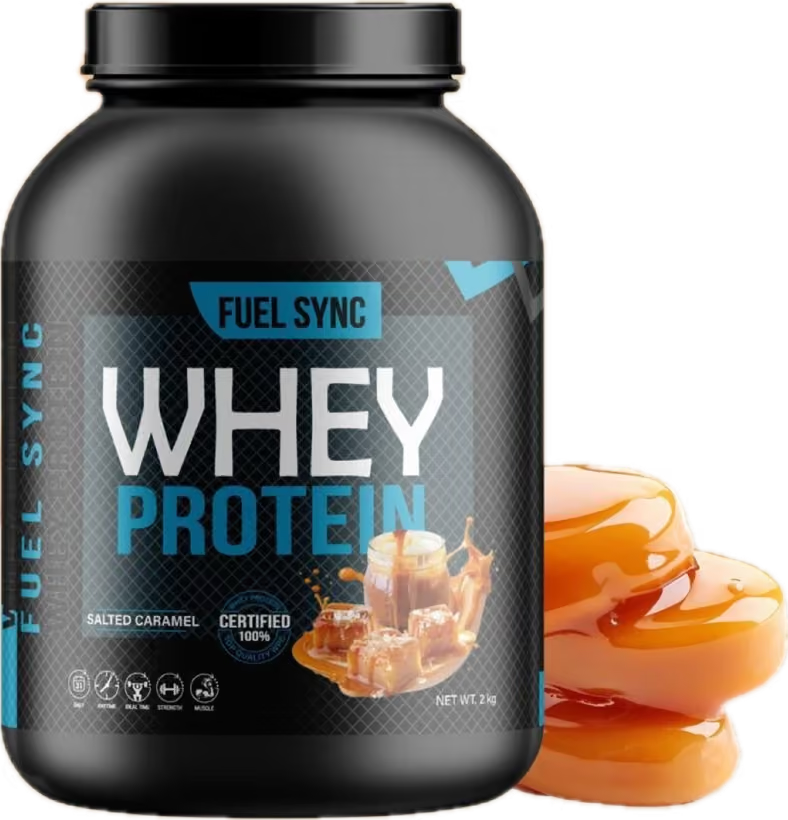
Here's how the two compare per 30 g scoop, from Fuel Sync's labels:
Vegan protein is nearly as good as whey for muscle when you eat enough protein overall. The research on pea protein is encouraging:
Whey still has an edge per gram, because it has more leucine, the amino acid that signals muscle to grow. Plant proteins usually have less, so a slightly bigger serving, or protein spread through the day, makes up the difference. What matters most is hitting 1.4 to 2.0 g of protein per kg of body weight a day.
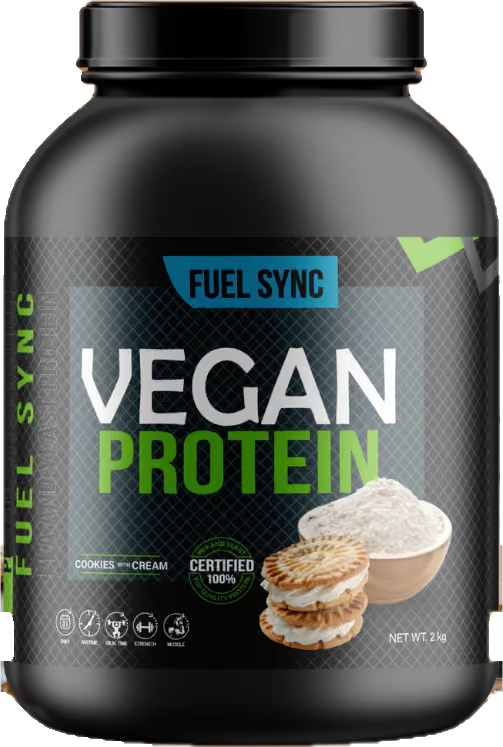
Most vegan proteins blend pea with rice, because rice fills pea's gap in methionine. Fuel Sync's vegan protein blends pea with yeast protein (Saccharomyces cerevisiae) instead.
Yeast protein is a complete protein in its own right, with all nine essential amino acids, so the blend covers every essential amino acid without relying on rice. It also helps the protein figure: our vegan protein gives 76 to 79 g of protein per 100 g.
Vegan protein is easier for people who react to milk, because it contains none. Whey concentrate has a small amount of lactose, under 2 g of sugars per scoop in our case, which most people handle fine.
Some people find pea protein gives them wind, especially with irritable bowel syndrome. If you're switching, start with half a scoop and build up over a week.
For a milk allergy, vegan protein is the safer choice. Our label lists no milk in the ingredients or in the "may contain" line. Check the label of any product if you have an allergy.
Vegan protein is useful during Orthodox fasting periods, such as Great Lent before Easter and the fast before Christmas, when many people in Cyprus avoid dairy, eggs, meat and fish.
Protein can drop sharply during a fast, especially for people who train. A vegan shake made with water or plant milk keeps it up without breaking the fast's dairy rule. Pair it with fasting staples that are high in protein, such as beans, lentils and chickpeas. It is one of the products our customers reach for more often when a fast begins.
Whey and vegan protein taste and mix differently.
In Fuel Sync's range, vegan protein costs less per serving than whey:
Choose whey if you:
Choose vegan protein if you:
A blend is. Fuel Sync's pea and yeast blend covers all nine essential amino acids. A single plant protein on its own may be low in one or two.
Yes. Studies comparing pea protein with whey found similar muscle and strength gains in people training regularly. Eat enough total protein and train consistently.
Some people notice wind at first, especially with pea protein. Start with half a scoop and build up.
Yes. Fuel Sync vegan protein has no dairy, eggs or meat in its ingredients. Mix it with water or plant milk.
If dairy suits you, start with Fuel Sync whey in ten flavours. For a plant-based or fasting-friendly choice, try Fuel Sync vegan protein in chocolate or cookies with cream. If you avoid dairy but still want an animal protein, see whey vs beef protein.
Contents