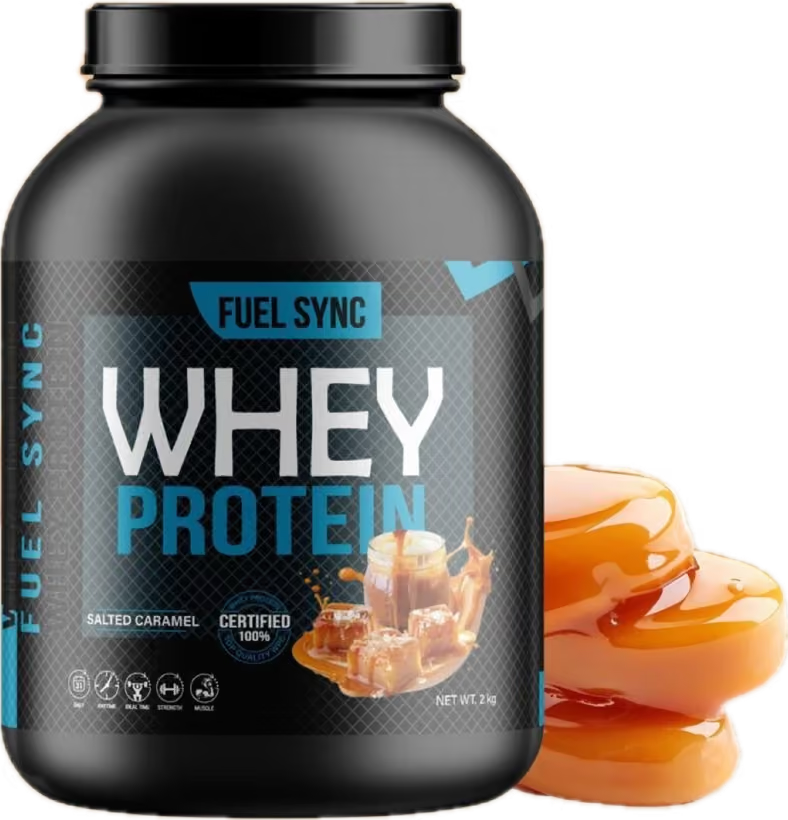
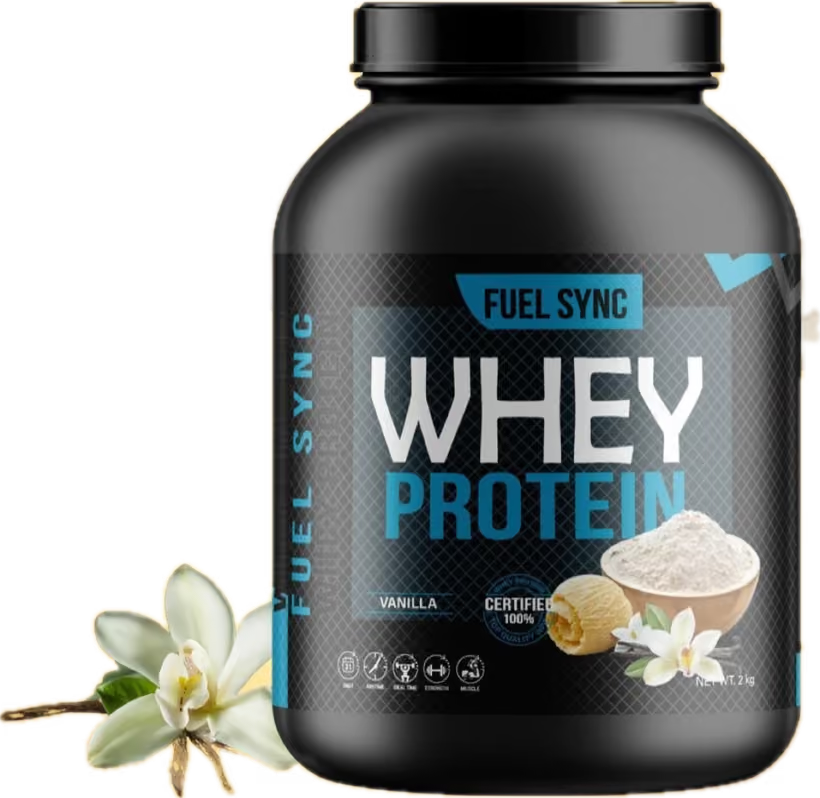
Whey isolate vs concentrate comes down to lactose, fat and price, not muscle. Both are complete proteins and support muscle growth equally well. Isolate is filtered further, so it has a little more protein and less lactose, fat and carbohydrate, and it costs more. For most people who train, concentrate gives the same results for less.
This guide explains the difference, who really needs isolate, and how to tell which one you're buying, with the figures from Fuel Sync's whey label.
What is the difference between whey isolate and concentrate?
The difference between whey isolate and concentrate is how much the whey is filtered after it is separated from milk.
- Whey concentrate is filtered to remove most of the water, fat and lactose. It keeps a little of each, which gives it a creamier taste. Typical protein: 70 to 80%.
- Whey isolate goes through extra filtering to remove almost all of the remaining fat and lactose. Typical protein: 90% or more.
- Whey hydrolysate is whey that has been partly broken down in advance. It digests slightly faster, tastes more bitter and costs the most.
All three come from the same milk protein and have the same complete set of essential amino acids.
Fuel Sync's whey concentrate, by the label
Here's what one 30 g scoop of Fuel Sync whey concentrate gives you, from our label:
- Protein: 22.2 g (74 g per 100 g)
- Sugars: 1.84 g, which includes the lactose
- Fat: 1.72 g
- Carbohydrate: 1.93 g
- Energy: 112 kcal
- Leucine: 2.4 g, the amino acid most linked to building muscle
The ingredient list starts with whey protein concentrate (about 95%, from milk), so you know exactly what's in the tub.
Which is better for building muscle?
Neither is better for building muscle. Studies comparing the two find similar gains in muscle and strength when people get similar protein per serving.
What matters far more is your total protein for the day (about 1.4 to 2.0 g per kg of body weight if you train, according to the International Society of Sports Nutrition) and getting 20 to 40 g at each meal or shake. A scoop of concentrate does that.
Is whey isolate better if you're lactose intolerant?
Isolate has less lactose, but for many people with lactose intolerance, concentrate is already low enough.
The European Food Safety Authority found that most people with lactose intolerance can handle up to 12 g of lactose in one sitting without symptoms. One scoop of Fuel Sync whey has under 2 g of sugars in total.
The bigger source is usually what you mix it with. 400 ml of milk has about 19 g of lactose, roughly ten times the scoop. In Frixos's experience with his clients, about nine times in ten it is the milk, not the whey. If shakes upset you:
- Mix with water first. If the problem goes away, it was the milk, not the whey.
- Try half a scoop with a meal. Smaller amounts with food are easier to digest.
- Choose isolate or a protein without milk only if even water-based shakes still bother you.
A milk allergy is different. It's a reaction to milk protein, not lactose, so isolate doesn't help. Choose a protein with no milk in it, such as vegan protein, and check the "may contain" line on any label.
Is whey isolate better for weight loss?
Isolate saves a few calories and grams of carbs and fat per scoop, but it won't change your weight loss on its own.
The gap per serving is small: a concentrate scoop has 1.7 g of fat and 1.9 g of carbs. Over a day of normal eating, that's minor. Isolate makes sense if you're on a strict diet, such as the last weeks before a competition. For most people losing weight, total calories and enough protein matter far more.
Taste, texture and price
Taste: concentrate keeps a little milk fat, so it tastes creamier and fuller. Isolate is lighter and thinner. Many people prefer concentrate in milkshake-style flavours.
Price: isolate costs more, because the extra filtering takes more milk to make the same amount of powder. You pay more per gram of protein for a difference most people don't need.
How to tell which whey you're buying
Read the ingredient list, not the front of the tub. EU labels list ingredients in order of weight, so the first line tells you most of what you need.
- "Whey protein concentrate" first: it's a concentrate.
- "Whey protein isolate" first and only: it's an isolate.
- Both listed: it's a blend. If isolate comes first, there's more isolate than concentrate, but the lactose savings shrink.
Then check the protein per 100 g. Concentrates usually sit at 70 to 80 g, and isolates at 85 to 90 g or more once flavour and sweetener are added. If the front says "isolate" but the protein per 100 g is in the 70s, check the ingredients.
Whey isolate vs concentrate: which to choose
Choose whey concentrate if you:
- digest milk products without trouble, or only notice problems with large glasses of milk
- want a creamy shake in lots of flavours
- want the best value per gram of protein
Choose whey isolate if you:
- get bloated even after a water-based concentrate shake
- are on a strict diet where every gram of carbs and fat counts
Choose a protein without milk if you:
- have a milk allergy, or want no milk at all
- react to any dairy, even in small amounts
Common questions about whey isolate and concentrate
Is whey isolate worth the extra money?
For most people, no. It supports muscle growth no better than concentrate. It's worth it if small amounts of lactose upset you or you're on a very strict diet.
Does whey concentrate have a lot of lactose?
No. A typical scoop has a few grams at most. One scoop of Fuel Sync whey has under 2 g of sugars in total, which includes the lactose.
Is whey isolate easier to digest?
For people sensitive to lactose, yes, slightly. For everyone else, both digest quickly and easily.
Can I use whey concentrate for cutting?
Yes. One scoop of our concentrate has 112 kcal and 22 g of protein, which fits most cutting diets easily.
Is whey isolate dairy free?
No. Whey isolate is still made from milk and is still a dairy product. It's lower in lactose, not free of milk protein.
Find your protein
For most people, Fuel Sync whey protein is the right choice: 22 g of protein per scoop, under 2 g of sugars and ten flavours. If you want no milk in your protein, try beef protein isolate or vegan protein. Our whey vs beef guide compares them side by side.