Whey protein is the protein from the liquid left over when milk is made into cheese, filtered and dried into a powder. It is a complete protein, rich in leucine, that digests quickly, which is why it is the most used and most studied protein supplement for people who train.
This guide explains how whey is made, the types, what it does and doesn't do, the side effects and who should avoid it, with the figures from Fuel Sync's whey label.
How whey protein is made
Whey protein is made in four main steps, starting at a cheese dairy:
- Milk is curdled. An enzyme such as rennet, or acid, is added to milk. The solids (the curds) become cheese.
- The liquid whey is separated. It's mostly water, with lactose, minerals and a small amount of protein.
- The whey is filtered. Fine membranes hold back the protein and let water, lactose and minerals through. More filtering gives a purer protein.
- It is dried into powder. Flavour, sweetener and thickeners are added for the finished product.
Fuel Sync's whey is about 95% whey protein concentrate from milk. The rest is flavour, two thickeners, an emulsifier, salt and two sweeteners, all listed on the label. It is made in Spain by Yava Nutrition S.L., the same manufacturer as the rest of our range.
The types of whey protein
The type of whey depends on how much it's filtered:
- Whey concentrate: 70 to 80% protein, with a little lactose and fat. It's creamy and the best value. Fuel Sync's whey is a concentrate, at 74 g of protein per 100 g.
- Whey isolate: 90% or more protein, with almost no lactose or fat. It costs more.
- Whey hydrolysate: whey broken down in advance. It digests slightly faster but there's little evidence it builds more muscle, and it costs the most.
Our guide to whey isolate vs concentrate explains which one suits you.
What's in a scoop of whey
Here's what one 30 g scoop of Fuel Sync whey gives you, from our label:
- Protein: 22.2 g
- Carbohydrate: 1.9 g, of which sugars 1.8 g
- Fat: 1.7 g
- Energy: 112 kcal
- Leucine: 2.4 g
Whey's protein is mainly beta-lactoglobulin (about 65%) and alpha-lactalbumin (about 25%), with smaller amounts of other milk proteins. Together they give a complete set of essential amino acids, with more leucine than most other protein sources.
What whey protein does
Whey protein gives your body the amino acids it needs to build and repair muscle. That's its main job, and it's where the evidence is strongest.
- Muscle growth and repair. Protein contributes to a growth in muscle mass, and to the maintenance of muscle mass, when you train. Studies comparing proteins at the same dose, such as Tang and colleagues in 2009, found whey raised muscle protein building after exercise more than soy or casein.
- Normal bones. Protein contributes to the maintenance of normal bones.
- Reaching your protein target. One scoop adds 22 g of protein for 112 kcal, which makes it easy to top up meals that fall short.
- Feeling full. Protein is the most filling of the three macronutrients, so a shake between meals can help if you're eating less to lose weight.
Researchers are also studying whey for blood pressure, blood sugar and immunity. The results so far are mixed or early, and none of these is an approved health claim in the EU, so treat any product that promises them with care.
Do you need whey protein?
You don't need whey if your meals already give you enough protein. Whey is food, in a convenient form.
People who train usually need 1.4 to 2.0 g of protein per kg of body weight a day, according to the International Society of Sports Nutrition. Our protein calculator works out your daily target. If your meals reach that, a shake adds little. If they don't (common with busy days, smaller appetites or plant-heavy diets), one or two scoops a day close the gap easily.
Nobody needs a shake to reach their target, but Frixos finds most of his clients benefit from the convenience: it saves the time of an extra meal and the cost of extra food, and it's easy to have on the go. The mistake he sees most is using whey as a replacement for nutritious meals instead of extra protein on top of them.
Whey protein side effects
Whey protein side effects are uncommon and usually mild. The main ones:
- Bloating or wind. Usually from lactose, either in the whey or in the milk you mix it with. Try mixing with water, or a smaller scoop with a meal. A scoop of our whey has under 2 g of sugars; 400 ml of milk has about 19 g of lactose.
- Acne. Some studies and case reports link whey and dairy to acne in people prone to it. The evidence is limited and mostly observational. If you notice a pattern, try a break or a protein without milk, such as vegan protein.
- Kidneys and liver. In healthy people, studies haven't found that normal protein intakes, including whey, harm the kidneys or liver. People with kidney or liver disease should agree their protein intake with their doctor.
Who should avoid whey protein?
Avoid whey if you have a milk allergy, because whey is a milk protein. Isolate doesn't help with an allergy, only with lactose.
Speak to your doctor before taking whey if you have kidney disease, liver disease, or a condition where your protein intake is limited.
With a milk allergy, choose vegan protein, which is plant based. If you simply prefer an animal protein without milk in the ingredients, beef protein isolate is an option, though its label notes it may contain traces of milk.
How to take whey protein
Most people take one or two scoops a day, mixed with 400 ml of water or milk. After training is a good time, but your total protein across the day matters more than timing.
Our guide on how and when to take whey covers scoops, timing, water or milk, and using whey in food.
How to choose a good whey
A good whey tells you everything on the label. Check:
- The ingredient list. "Whey protein concentrate" or "isolate" should come first. Watch for blends and added amino acids such as glycine high up the list, which can inflate the protein figure.
- Protein per scoop and per 100 g. A concentrate should give about 70 to 80 g per 100 g.
- Claims. EU rules only allow approved health claims. A tub promising fat burning or hormone boosting is a warning sign.
- Storage. Keep it below 25°C, closed and dry. In a Cypriot summer, that means indoors, not in the car.
Our guide to buying protein in Cyprus covers the full checklist.
Common questions about whey protein
Is whey protein natural?
Whey itself comes from milk. Most whey powders add flavour, sweetener and thickeners for taste and texture. Fuel Sync's whey is about 95% whey protein concentrate.
Is whey protein a steroid?
No. Whey is a food protein from milk. It has no hormonal effect beyond providing amino acids.
Can women take whey protein?
Yes. Whey works the same way for everyone. It won't add bulk on its own; muscle comes from training and enough protein.
Does whey protein make you fat?
Not on its own. A scoop of Fuel Sync whey has 112 kcal. You gain fat only if your total calories are above what you use.
Is whey protein gluten free?
Whey itself contains no gluten. Our label notes the product may contain traces of gluten, so people with coeliac disease should check every label.
Try Fuel Sync whey
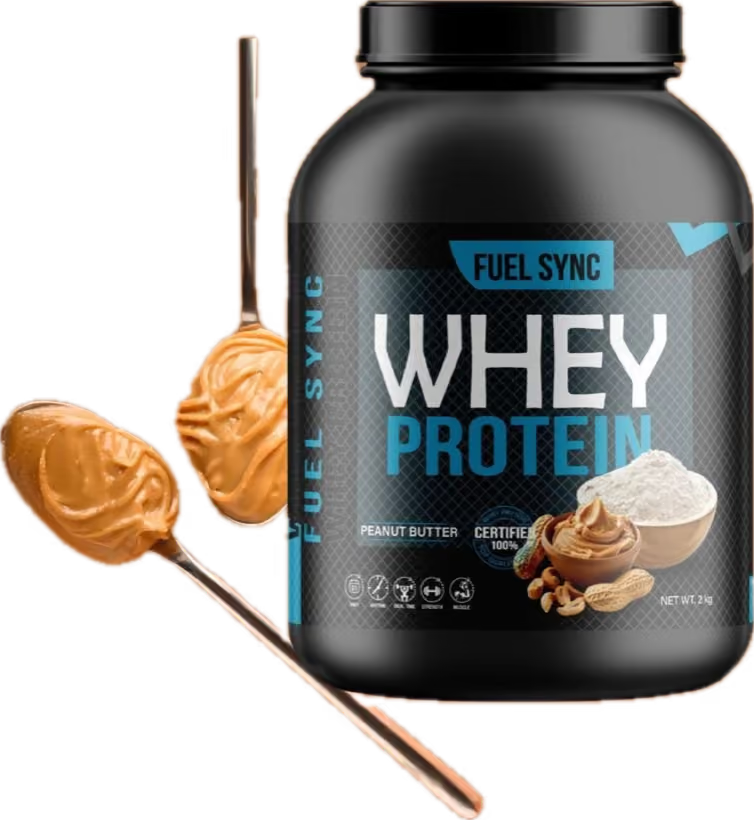
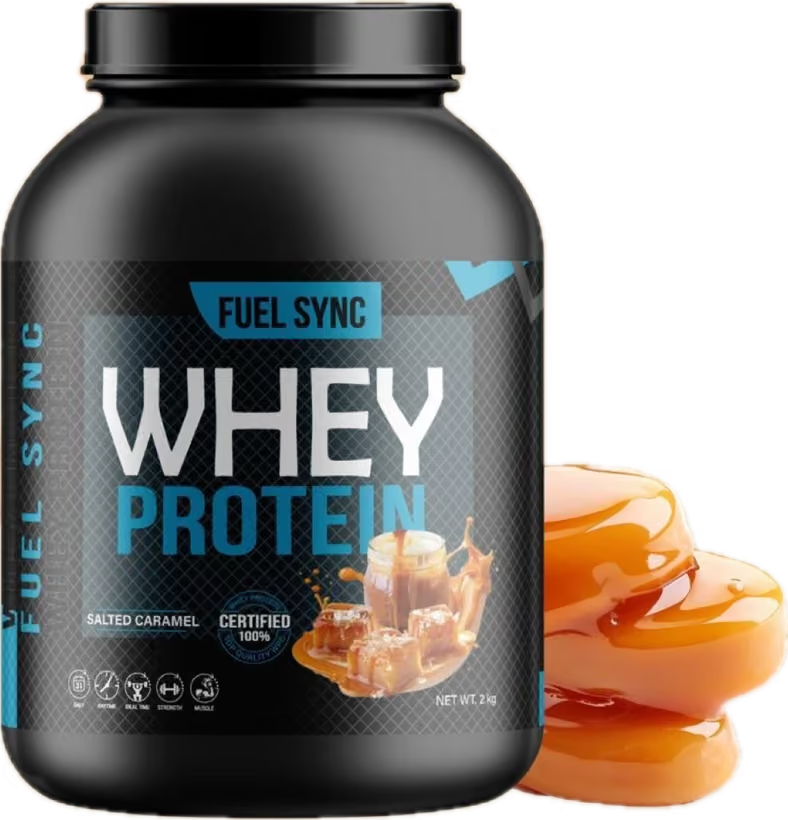
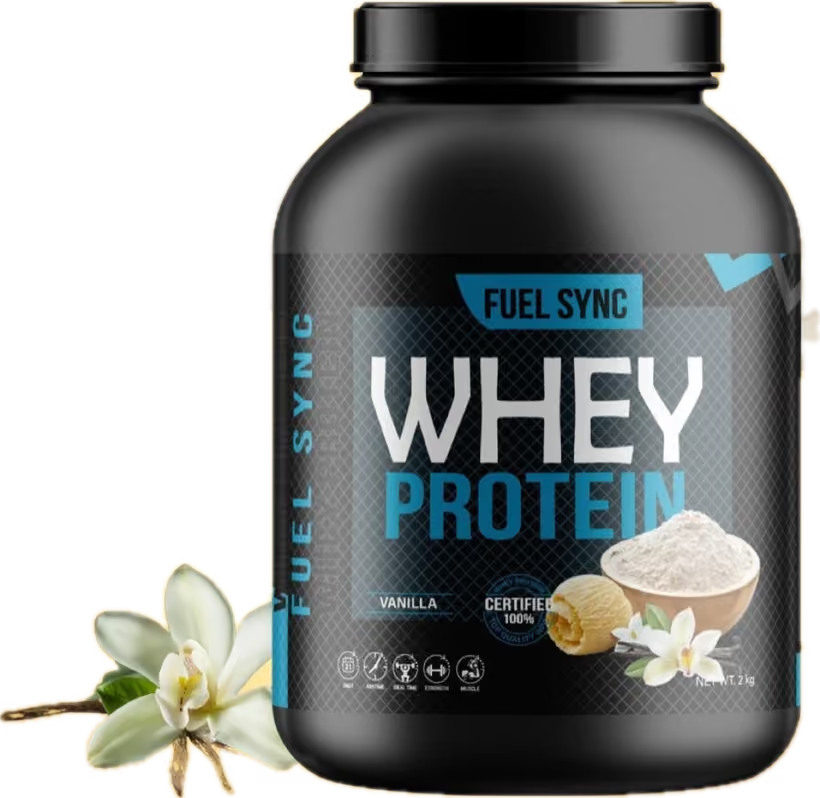
Fuel Sync whey protein is a whey concentrate with 22 g of protein and 2.4 g of leucine per scoop, in ten flavours from vanilla and chocolate to pistachio and salted caramel.