Whey protein vs beef protein comes down to your stomach and your goal. Whey is the better all-rounder for building muscle, with more leucine and a creamy taste. Beef protein isolate suits you if dairy upsets you or you keep carbs and fat close to zero, and it gives more protein per scoop.
Every figure for Fuel Sync's products below is read from our own labels.
Whey protein vs beef protein at a glance
Here is how the two compare, scoop for scoop, on Fuel Sync's labels:
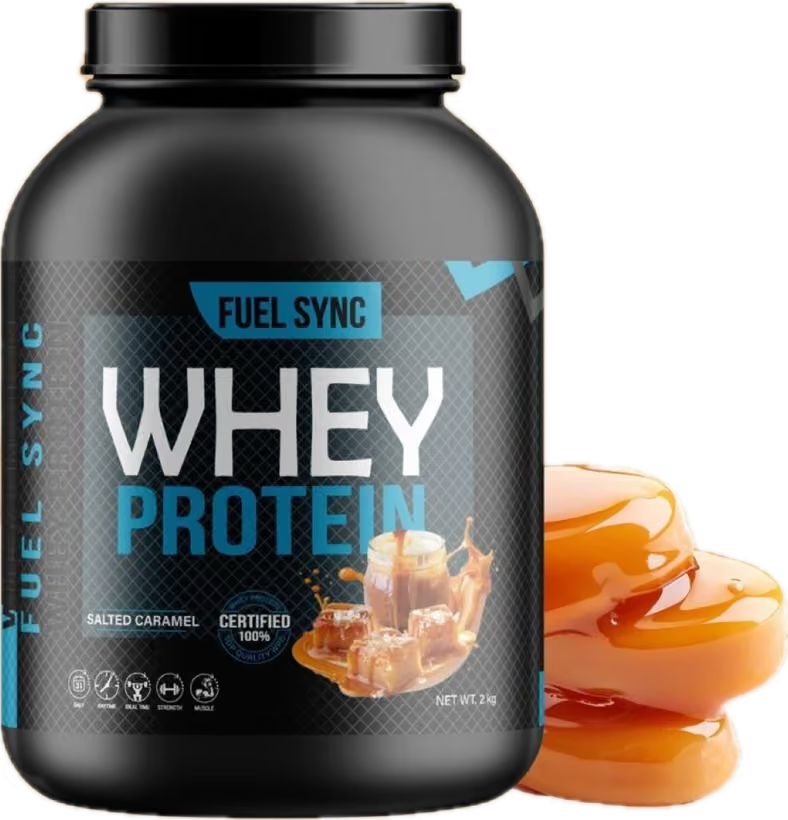
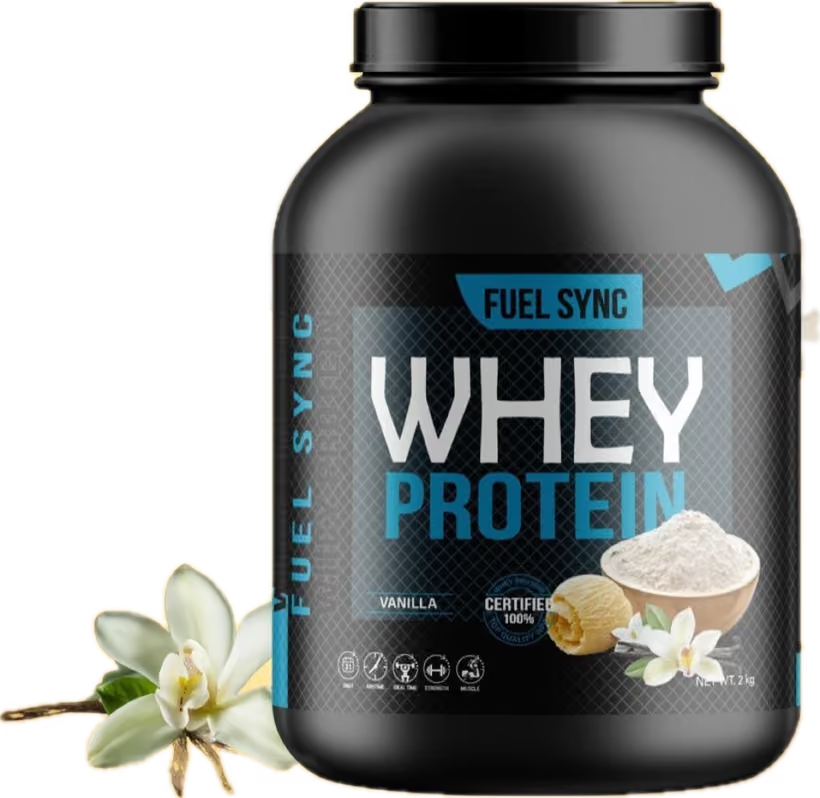
- Whey protein (30 g scoop): 22.2 g of protein, 1.7 g of fat, 1.9 g of carbohydrate, 112 kcal. Made from milk. Ten flavours. Mix with 400 ml of water or milk.
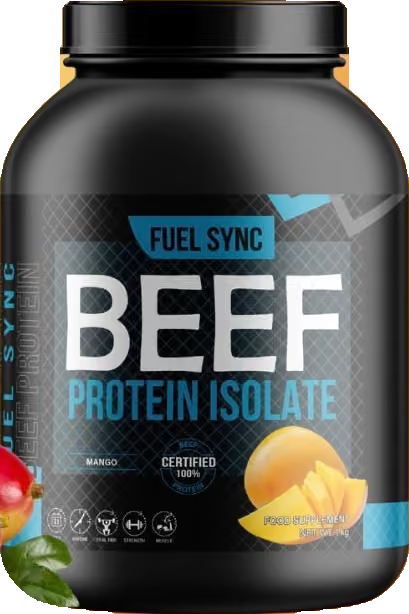
- Beef protein isolate (30 g scoop): 26.1 g of protein, 0 g of fat, 0 g of carbohydrate, 104 kcal. No milk in the ingredients. Mango or pineapple. Mix with 200 ml of cold water.
What is whey protein?
Whey protein is the protein in milk that is left over when cheese is made, filtered and dried into a powder. It is the most studied protein supplement there is.
There are three main kinds. Whey concentrate, which is what Fuel Sync's whey is, keeps some of milk's fats and lactose and has the creamiest taste. Whey isolate is filtered further to remove most of the lactose and fat. Whey hydrolysate is broken down in advance to digest faster, and costs the most.
Fuel Sync's whey is about 95% whey protein concentrate, which gives 74 g of protein per 100 g and 22 g per scoop.
What is beef protein isolate?
Beef protein isolate is protein extracted from beef and filtered until almost nothing else is left: no fat and no carbohydrate. It isn't ground-up steak, and it doesn't taste of meat.
It was made for people who want an animal protein without dairy. Fuel Sync's beef protein lists only beef protein, citric acid, flavour, beta-carotene for colour and two sweeteners. That gives 87 g of protein per 100 g, the highest of any protein in our range.
Which is better for building muscle?
Whey is slightly better for building muscle, scoop for scoop, because it has more leucine and digests quickly. Beef protein still supports muscle growth, and the gap shrinks when your total protein for the day is right.
Leucine is the amino acid that tells your muscles to start building. The International Society of Sports Nutrition suggests about 700 to 3,000 mg of leucine in each protein serving. One scoop of our whey gives 2.4 g, comfortably in that range.
Beef protein isolate has less leucine per gram, because much of its protein comes from the connective tissue of the meat. It makes up for some of that with more protein per scoop. To get the most from it, take it with a meal that has other protein, or add a scoop of essential amino acids.
The bigger picture matters more than the shake. People who train usually do well on 1.4 to 2.0 g of protein per kg of body weight a day, and either powder helps you reach it.
Which is easier on your stomach?
Beef protein is usually easier on your stomach if dairy is the problem, because it has no milk in its ingredients and no lactose. Whey concentrate contains some lactose, which can cause bloating in people who don't digest it well.
Our whey has under 2 g of sugars per scoop, and some people with mild lactose intolerance cope with that amount. If even a little milk upsets you, beef is the safer choice.
One note for allergies: our beef protein's label warns it may contain traces of milk. That matters for a true milk allergy, not for most lactose intolerance.
Taste and mixing
Whey and beef protein taste completely different, which is often what decides it.
- Whey is thick and creamy, like a milkshake. It works with water or milk, in porridge, in smoothies and in baking. Fuel Sync's whey comes in ten flavours, from vanilla and chocolate to pistachio and salted caramel.
- Beef protein mixes thin and clear in cold water, more like a fruit drink than a shake. It's refreshing after training in the heat, and it sells best in the Cypriot summer. Fuel Sync's beef protein comes in mango and pineapple.
Mix beef protein with water, not milk, if you're taking it to avoid dairy.
Calories, carbs and fat
Beef protein isolate is the leaner of the two: 104 kcal, 0 g of fat and 0 g of carbohydrate per scoop. Whey gives 112 kcal, 1.7 g of fat and 1.9 g of carbohydrate.
The difference is small for most people. It matters if you count every gram on a low-carb or keto diet, or in the last weeks before a competition. For everyone else, choose on taste and stomach.
Price and value
Compare protein powders by what you pay for the protein, not the price of the tub. In Fuel Sync's range, beef protein gives slightly more protein for your money.
- Whey protein 2 kg: €65 for 66 servings, about €0.98 a scoop for 22 g of protein.
- Beef protein isolate 1 kg: €35 for 33 servings, about €1.06 a scoop for 26 g of protein.
Per gram of protein, that's about 4.4 cents for whey and 4.1 cents for beef. Whey comes in a bigger tub, so you reorder less often.
Which should you choose?
Choose whey protein if you:
- want the strongest support for muscle building per scoop
- like creamy, milkshake-style flavours and want plenty to choose from
- mix your protein into food, such as porridge, yoghurt or pancakes
- digest milk without any trouble
Choose beef protein isolate if you:
- get bloated or uncomfortable after dairy
- want 0 g of fat and carbohydrate, for keto, low carb or a cut
- prefer a light, fruity drink to a thick shake
- want the most protein in each scoop
Can you take both?
Yes, and many people do. A common split is whey after training at home and beef as a cold, fruity drink in summer or on low-carb days. Both count towards the same daily protein target.
Common questions about whey and beef protein
Is beef protein made from real beef?
Yes. Beef protein isolate is extracted from beef and then filtered to remove the fat and carbohydrate. It's flavoured, so it doesn't taste of meat.
Is beef protein good if you are lactose intolerant?
Yes. Beef protein has no milk in its ingredients and no lactose. Mix it with water rather than milk, and note that our label says it may contain traces of milk.
Is beef protein keto friendly?
Yes. Fuel Sync's beef protein has 0 g of carbohydrate and 0 g of fat per scoop, so it fits a keto or very low-carb diet.
Is whey or beef protein better for weight loss?
Both help with weight loss in the same way, by keeping you full and protecting muscle while you eat less. Beef has slightly fewer calories per scoop and more protein, so it has a small edge on a strict diet.
Can I mix beef protein with milk?
You can, and the label allows water or milk. If you take beef protein to avoid dairy, mix it with water: milk brings the lactose back.
Find your protein
If milk suits you, start with whey protein in ten flavours. If you'd rather avoid dairy, try beef protein isolate in mango or pineapple. For a plant-based choice, see our vegan protein, or read our buying guide.