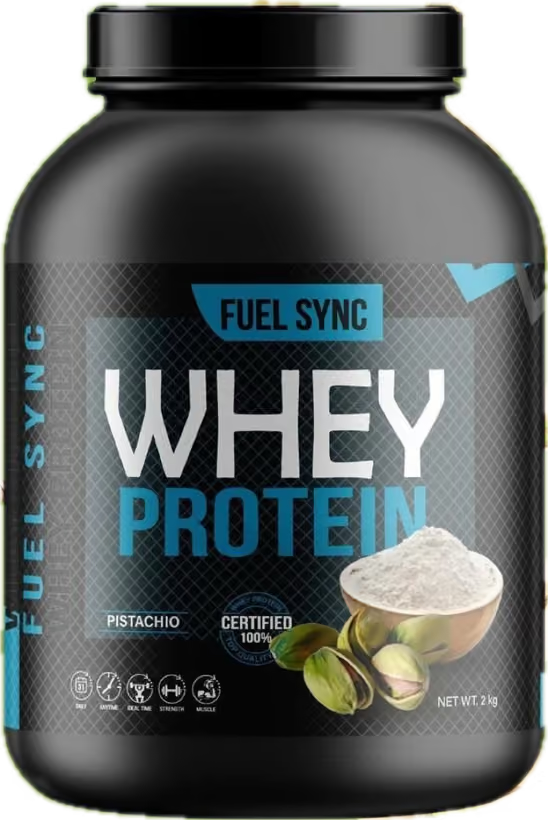
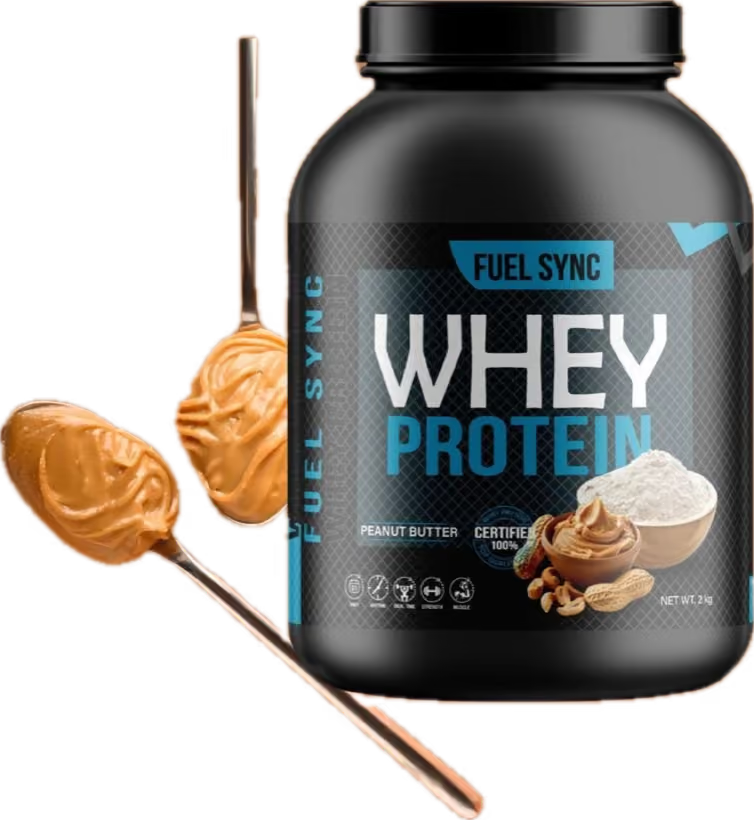
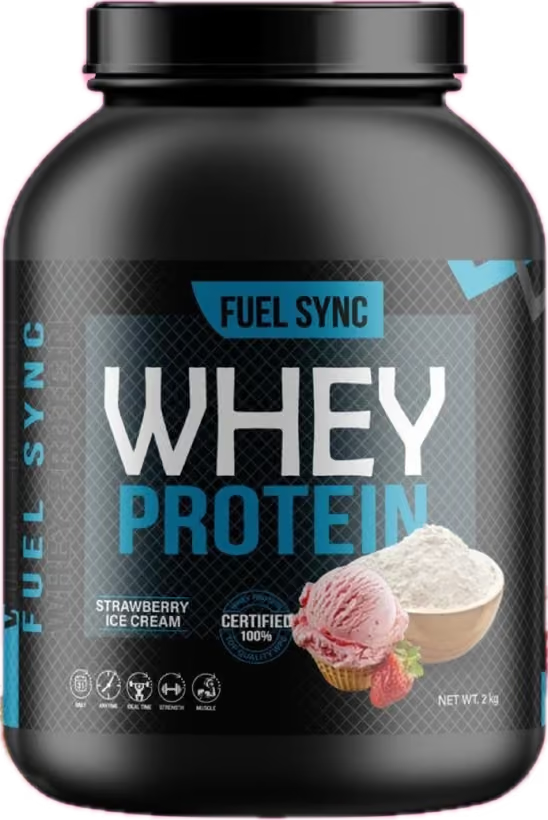
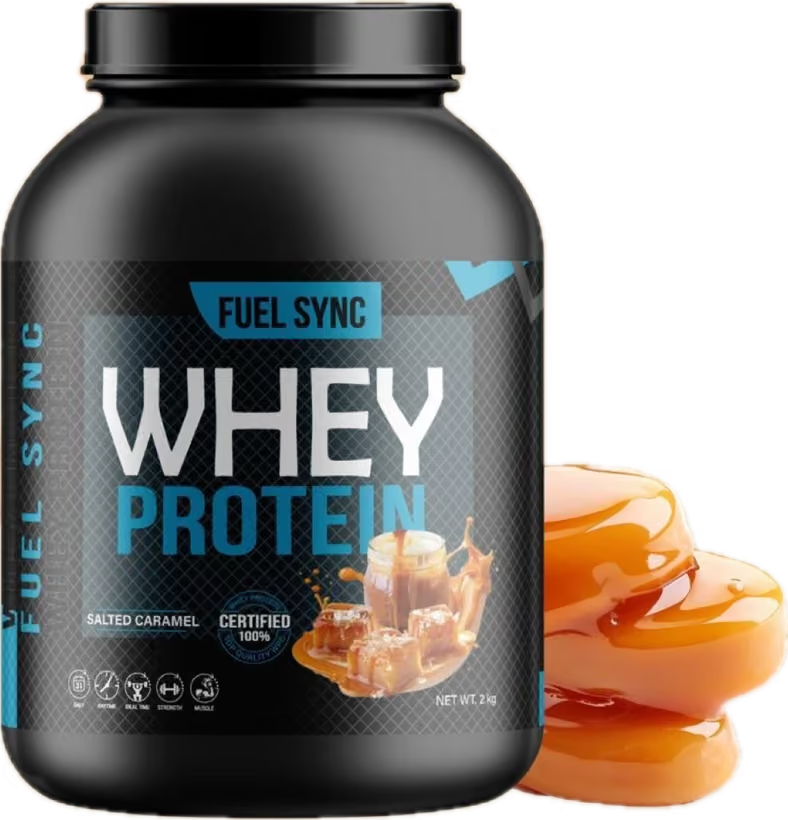
Whey protein for weight loss works by helping you eat less and keep your muscle, not by burning fat. A shake gives a lot of protein for few calories, keeps you full, and helps protect muscle while you're in a calorie deficit. The weight loss itself still comes from eating fewer calories than you use.
This guide explains how whey helps, how much protein to aim for, and how to fit shakes into a diet, with the figures from Fuel Sync's whey label.
How whey protein helps with weight loss
Whey helps with weight loss in three ways:
- It keeps you full. Protein is the most filling of the three macronutrients, so a shake between meals can stop you snacking.
- It protects your muscle. When you eat less, your body can lose muscle as well as fat. Enough protein, with training, helps you keep the muscle, so more of what you lose is fat.
- It's a lot of protein for few calories. That makes it easier to hit a high protein target without going over your calories.
Studies that add whey to a diet tend to find modest extra losses of body fat, mostly because people feel fuller and keep more muscle. On its own, without eating less, whey won't cause weight loss.
How much protein to eat when losing weight
When you're losing weight, eat more protein, not less. People who train usually do well at 1.6 to 2.2 g per kg of body weight a day, and the higher end helps most during a diet. Work out your own number with our protein calculator.
For a 75 kg person, that's about 120 to 165 g of protein a day. Spread it over three or four meals or shakes of 25 to 40 g each.
Whey vs common foods, calorie for calorie
Here's how one scoop of whey compares with familiar foods for protein and calories:
- Fuel Sync whey with water (30 g): 22 g of protein, 112 kcal.
- Fuel Sync whey with 400 ml of semi-skimmed milk: about 36 g of protein, about 300 kcal.
- 100 g of halloumi: about 21 g of protein, about 320 kcal.
- Three eggs: about 18 g of protein, about 210 kcal.
- 150 g of plain Greek yoghurt (2% fat): about 15 g of protein, about 110 kcal.
Food still matters for fibre, vitamins and staying full, but whey is one of the leanest ways to add protein.
Using whey protein for weight loss
Use a whey shake to replace something, not to add to your day.
- Swap a snack. A bakery cheese pie or a pastry can easily have 300 kcal or more with little protein. A whey shake with water has 112 kcal and 22 g of protein.
- Fix a low-protein breakfast. Add a scoop to porridge or have a shake with toast.
- After training. A shake after a session helps your muscles recover and keeps you from raiding the fridge.
- Before a meal out. A shake an hour before can take the edge off your hunger.
Mix with water when you're cutting, to keep calories low. Use milk when you want a more filling shake and can fit the extra calories.
Can a shake replace a meal?
A whey shake on its own doesn't replace a meal. It has protein but little fibre, few vitamins and only 112 kcal, so you'll likely be hungry soon after and make up for it later.
For a quick meal, blend a scoop with milk, a handful of oats and a banana. That gives you protein, carbohydrate and fibre in one glass.
A day of eating with whey
Here's an example day for someone losing weight who trains:
- Breakfast: porridge with a scoop of whey stirred in, and berries.
- Lunch: chicken or bean salad with plenty of vegetables.
- Afternoon: a whey shake with water instead of a pastry or a sweet frappé.
- Dinner: fish or lean meat, vegetables and a portion of rice or potatoes.
Two scoops a day plus protein at each meal gets most people to their target.
Is isolate better for weight loss?
Isolate saves a few calories per scoop, but the difference is small. A scoop of our concentrate has 1.7 g of fat and 1.9 g of carbohydrate. Over a day, that's minor. Our guide to whey isolate vs concentrate has the full comparison.
Common questions about whey and weight loss
Will whey protein make me gain weight?
Only if it takes you over your daily calories. One scoop with water is 112 kcal. Added on top of a normal diet with no other changes, any extra calories can add up.
Can I drink whey without working out?
Yes. Protein still keeps you full and helps protect muscle while you diet. You'll keep more muscle if you also do some strength training.
Should I drink a protein shake in the morning or at night to lose weight?
Whenever it replaces the snack or meal you'd otherwise overeat. For many people that's mid-afternoon.
How many protein shakes a day to lose weight?
One or two, as part of your daily protein target. More than that usually means you're replacing too much real food.
Get started
Fuel Sync whey protein gives 22 g of protein for 112 kcal per scoop with water, in ten flavours. For how much and when, read how and when to take whey.