You only need a mass gainer if you struggle to eat enough calories to gain weight. A mass gainer is protein powder with a large amount of carbohydrate and some fat added, often 500 to 1,500 kcal a serving. For most people, a home-made shake of whey, milk, oats and banana does the same job, with ingredients you choose.
This guide explains what a mass gainer is, who it suits, the downsides, and how to make your own, with the figures from Fuel Sync's whey label.
What is a mass gainer?
A mass gainer is a powder that mixes protein with a large amount of carbohydrate and some fat, to add calories in a drink. A typical gainer has a 2:1 or 3:1 ratio of carbohydrate to protein, often from maltodextrin or oats, and 500 to 1,500 kcal per serving.
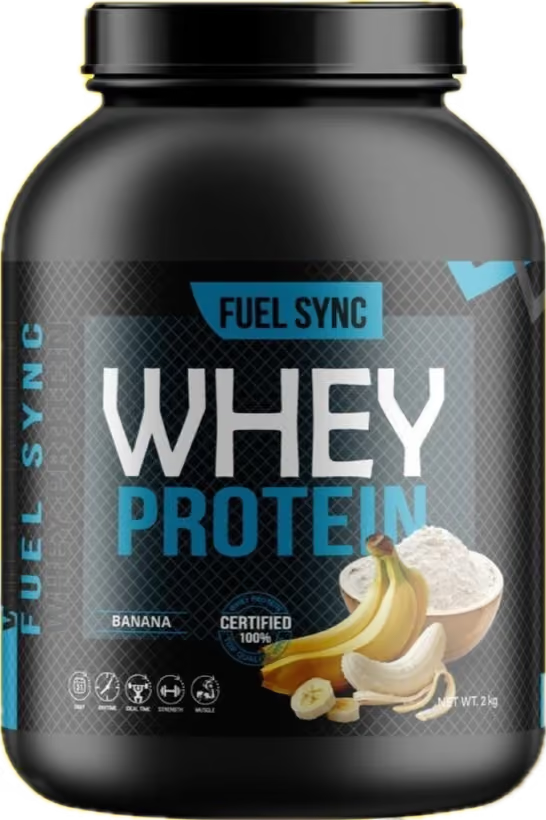
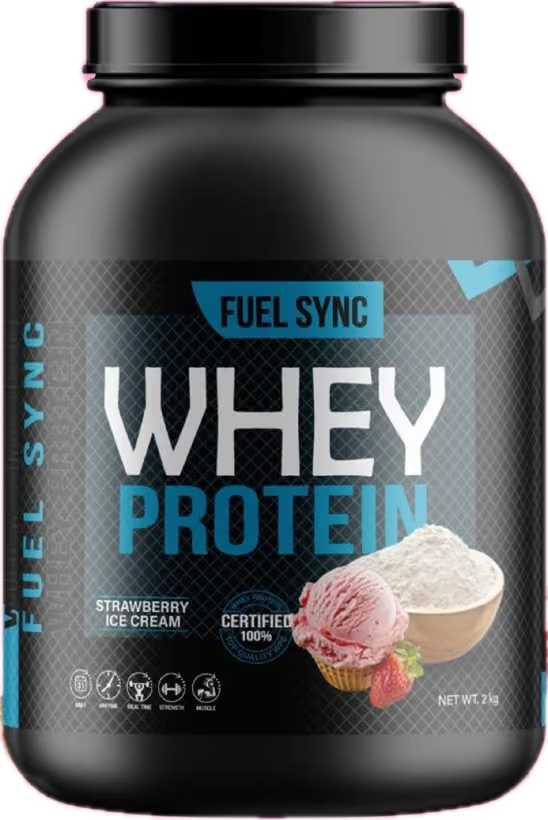
A protein powder like whey is the opposite: mostly protein, with very little carbohydrate or fat. One scoop of Fuel Sync whey has 22 g of protein and 112 kcal.
Who needs a mass gainer?
A mass gainer suits people who need a lot of extra calories and can't eat them as food. For example:
- Very lean people who train hard and can't gain weight however much they eat.
- People with small appetites who feel full quickly at meals.
- Athletes moving up a weight class, or in heavy training blocks that burn a lot of energy.
- Teenage athletes who are still growing and training a lot, with a parent or coach involved.
If you're trying to stay the same weight or lose weight, you don't need one.
The downsides of mass gainers
Mass gainers have three common downsides:
- Fat gain. A 1,000 kcal shake on top of normal meals adds up quickly. Without enough training, much of the extra weight is fat.
- Stomach upset. A large, sugary, milky shake can cause bloating and wind, especially in people sensitive to lactose.
- Few vitamins and little fibre compared with the same calories from real food.
Mass gainer vs protein powder
Choose a protein powder if you want more protein without many calories. Choose a mass gainer only if you need a lot more calories and can't eat them.
- Protein powder (Fuel Sync whey): 22 g of protein, 112 kcal per scoop. Fits any goal, from cutting to bulking.
- Mass gainer: 25 to 60 g of protein and 500 to 1,500 kcal per serving. Built only for gaining weight.
The advantage of protein powder is control: you add the carbohydrate and fat yourself, from foods you choose.
Make your own mass gainer
A home-made gainer gives you the same calories with ingredients you know. Blend:
- 1 scoop of Fuel Sync whey (30 g): 22 g of protein, 112 kcal
- 500 ml of whole milk: about 17 g of protein, 320 kcal
- 60 g of oats: about 8 g of protein, 225 kcal
- 1 banana: about 1 g of protein, 105 kcal
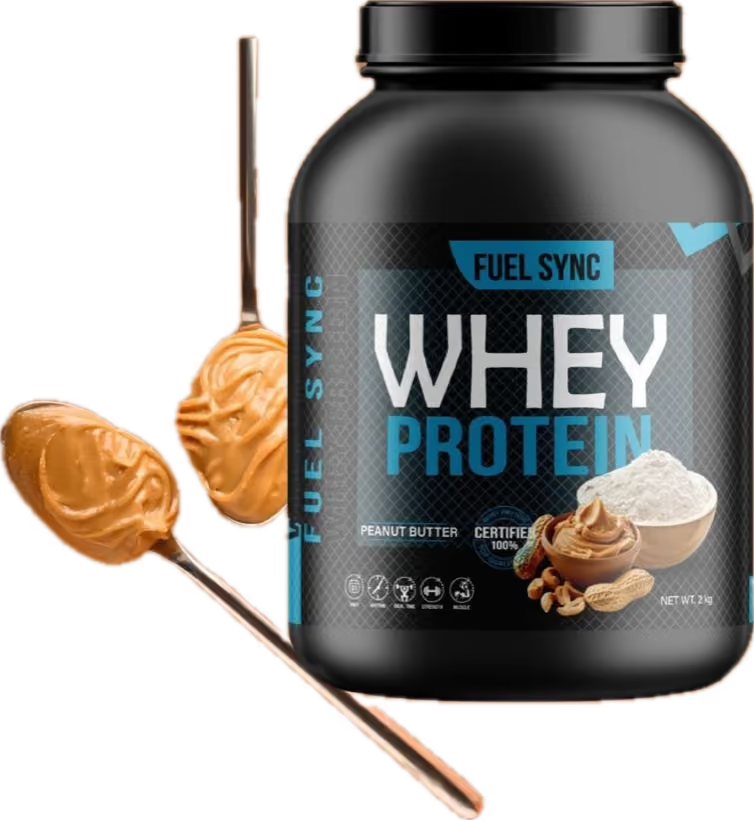
- 1 tablespoon of peanut butter (20 g): about 5 g of protein, 120 kcal
Total: about 880 kcal, 53 g of protein, 92 g of carbohydrate and 34 g of fat.
Need more? Add a second tablespoon of peanut butter or more oats. Need less? Use semi-skimmed milk and leave out the peanut butter, for about 680 kcal. Banana, chocolate, peanut butter and salted caramel whey all work well in a gainer shake.
How to gain weight without a gainer
Most people can gain weight with food and a protein shake:
- Eat three meals and two snacks a day, with protein at each.
- Add calorie-dense foods that are easy to eat: olive oil on salads, nuts, halloumi, whole milk, rice and bread.
- Have a whey shake with milk after training, about 300 kcal and 36 g of protein.
- Weigh yourself weekly. Aim to gain about 0.25 to 0.5 kg a week. Faster usually means more fat.
Mass gainer vs creatine
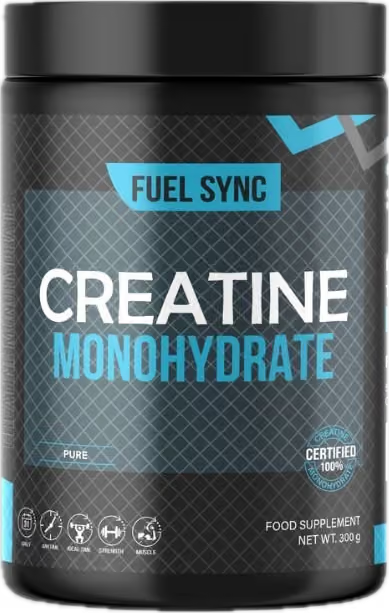
They do different jobs, so it isn't one or the other. A mass gainer adds calories. Creatine helps your muscles do more work in each session, and it adds 1 to 2 kg of water to your muscles in the first weeks. Many people trying to gain muscle use both a calorie-rich diet and creatine. Read creatine benefits and safety.
Common questions about mass gainers
Is a mass gainer bad for you?
Not for a healthy person who needs the calories. It becomes a problem if it adds fat you don't want, or replaces real meals.
Can I use whey protein to gain weight?
Yes. Mix it with whole milk and add oats, banana and nut butter for a home-made gainer.
When should I drink a mass gainer?
Between meals or after training, so it adds to your food rather than replacing it.
Do mass gainers work without training?
They'll add weight, but without training, most of it will be fat.
Build your own gainer
Start with Fuel Sync whey protein in ten flavours and the recipe above. For the rest of your routine, read how and when to take whey.