Creatine benefits people who train by helping muscles make energy for short, hard efforts, which over weeks means more reps, more strength and more muscle. It is one of the most researched supplements there is, and it is safe for healthy adults at 3 to 5 g a day.
This guide covers what creatine is, what it does, its side effects and the myths, with the figures from Fuel Sync's own creatine labels.
What is creatine?
Creatine is a compound your body makes from three amino acids (arginine, glycine and methionine) and also gets from meat and fish. About 95% of it is stored in your muscles, mostly as phosphocreatine.
Your body makes around 1 g a day, and a diet with meat or fish adds roughly another gram. That is enough for everyday life but not enough to fill your muscles' stores completely. A creatine supplement tops them up, which is why the effect builds over a few weeks rather than in a single dose.
Vegetarians and vegans start with lower stores, because plants contain almost no creatine. They often notice the biggest difference when they start taking it.
What does creatine do?
Creatine helps your muscles rebuild ATP, the molecule they use for energy, during short and intense efforts such as a heavy set, a sprint or a jump. With fuller creatine stores, you can push for a little longer before you tire.
That small extra effort adds up. Across many studies, people who take creatine while training lift more, do more reps and gain more lean muscle than people who train without it. The EU allows one claim on creatine labels: creatine increases physical performance in successive bursts of short-term, high-intensity exercise, with a daily intake of at least 3 g.
Creatine benefits, backed by research
Creatine benefits are best proven for strength and power training, and they are being studied for health and the brain.
- More strength and power. Creatine lets you do more work in each session, which leads to bigger strength gains over time.
- More lean muscle. Training harder, with more water inside the muscle cells, supports muscle growth.
- Better repeated sprints. Sports with short bursts, such as football, basketball and padel, benefit most.
- Faster recovery between sets. Creatine stores refill phosphocreatine faster, so the next set starts closer to full strength.
- Brain and healthy ageing. Research is looking at creatine for memory, mental tiredness and muscle loss in older adults. The early results are promising, but this is not yet proven.
Creatine side effects
Creatine side effects are mild for most people. The common ones are water weight and, with large single doses, an upset stomach.
- Water weight. Expect 1 to 2 kg on the scale in the first weeks. The water is stored inside your muscles, not under your skin, and it is a sign the creatine is working.
- Stomach upset. Taking 10 g or more at once can cause bloating or loose stools. One 5 g scoop a day avoids it.
- Cramping and dehydration. Studies have not found that creatine causes either. Drink water through the day, as you should anyway when training in Cyprus.
Is creatine safe?
Creatine is safe for healthy adults at the usual 3 to 5 g a day, including over years of daily use. It is not a steroid and not a banned substance in sport.
- Kidneys. Creatine raises creatinine in blood tests, which can look like a kidney problem on paper. Studies in healthy people have not found kidney damage. If you have kidney disease, or take medicines that affect your kidneys, speak to your doctor before you start. Tell your doctor you take creatine before any blood test.
- Hair loss. The worry comes from a single 2009 study of rugby players that found higher levels of DHT, a hormone linked to hair loss. It did not measure hair loss, and later studies have not shown creatine causes it.
- Under 18s, pregnancy and breastfeeding. Fuel Sync's labels advise against creatine during pregnancy and breastfeeding without speaking to a doctor first. Teenagers should check with a doctor too.
Who benefits most from creatine
Creatine benefits most the people whose training is made of short, hard efforts, and the people who eat little or no meat.
- People who lift weights. Strength and muscle gains are where the evidence is strongest.
- Team and racket sports. Football, basketball, padel and anything with repeated sprints.
- Vegetarians and vegans. Lower starting stores mean a bigger top-up.
- Older adults who train. Creatine with resistance training may help hold on to muscle and strength with age.
Creatine does less for steady endurance work, such as long runs or rides at an even pace, because that relies on a different energy system. It doesn't replace training or enough protein and sleep: it helps you get more out of the sessions you do.
How much creatine should you take?
Take 3 to 5 g of creatine monohydrate every day, training days and rest days alike. Taking it daily matters far more than the time you take it. Our guide on how to take creatine covers timing, loading and mixing.
A loading phase of 20 g a day for a week fills your muscles faster, but it is optional: 3 to 5 g a day fills them in about three to four weeks with less risk of an upset stomach.
Not every scoop gives the same amount of creatine. Here is what Fuel Sync's labels say:
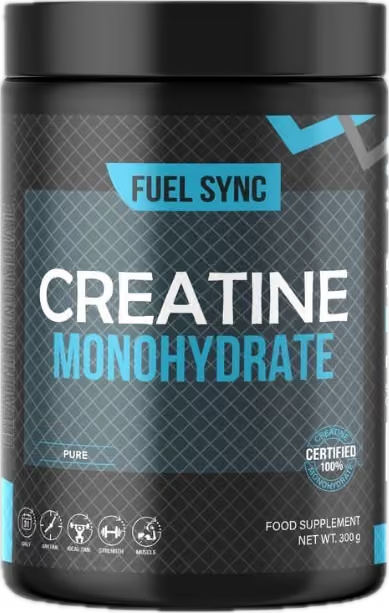
- Pure creatine monohydrate: one 5 g scoop gives 5,000 mg of creatine monohydrate, or 4,388 mg of creatine itself, with nothing else added. 60 servings per 300 g tub.
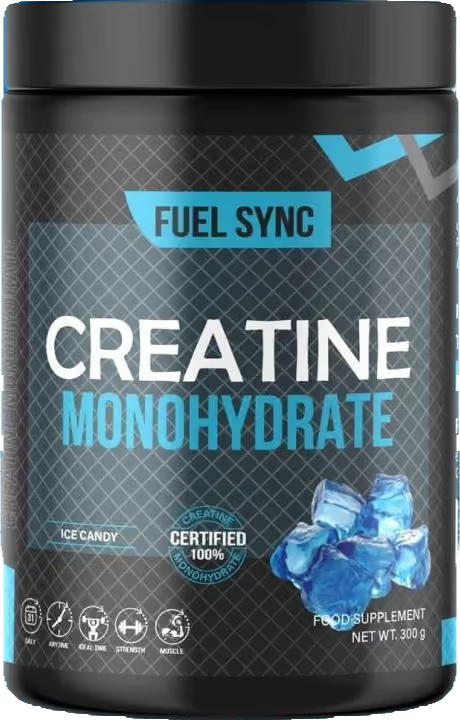
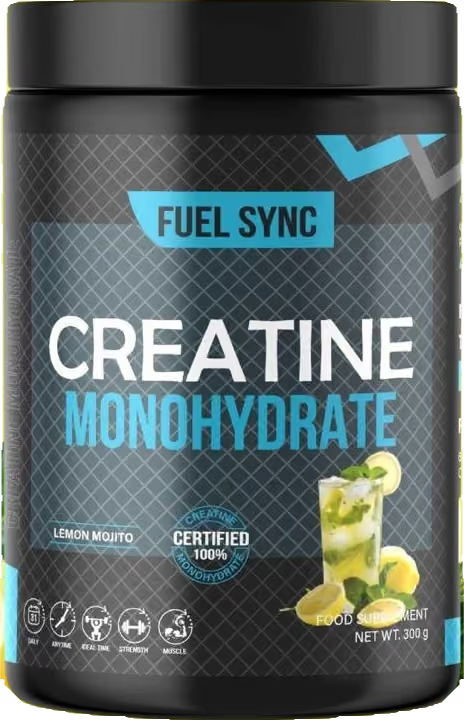
- Flavoured creatine monohydrate: one 6 g scoop gives 4,050 mg of creatine monohydrate, or 3,564 mg of creatine itself, plus 450 mg of taurine, flavour and sweetener. 50 servings per 300 g tub.
Both give more than the 3 g a day the EU claim requires. Pure suits shakes and coffee, because it has no taste. The flavoured version is made to drink on its own with 300 to 350 ml of water.
Which type of creatine is best?
Creatine monohydrate is the best type of creatine for almost everyone, because nearly all of the research uses it. Other forms, such as creatine HCl or buffered creatine, cost more and haven't been shown to work better.
Common questions about creatine
Does creatine make you gain weight?
Creatine can add 1 to 2 kg in the first weeks, but that is water stored inside the muscles, not fat. Over months, any further gain comes from the extra muscle you build by training harder.
Can I take creatine with protein?
Yes. Creatine and protein do different jobs and work well together. Many people add a scoop of pure creatine to their protein shake so they remember to take it every day. Read creatine and whey together.
Do I need to cycle creatine?
No. There is no evidence that you need breaks from creatine. If you stop, your muscle stores fall back to normal over about four to six weeks.
Is creatine safe for women?
Yes. Creatine works the same way in women and men, and it does not add bulk on its own. Women often start with lower creatine stores, so they can benefit as much or more. Read creatine for women.
Can I drink coffee with creatine?
Yes, for most people. Coffee doesn't stop creatine from working when you take it every day. If you notice an upset stomach, take them at different times.
Start with creatine
If you want the simplest option, pure creatine monohydrate is one 5 g scoop a day with nothing added, for 60 days. If you'd rather drink it on its own, flavoured creatine comes in four flavours with taurine.